
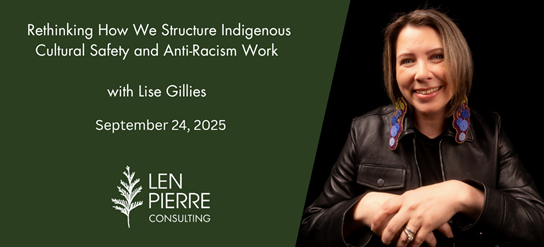
Conversations about reconciliation, Indigenous cultural safety and anti-racism are more visible than ever. Across sectors, organizations are making greater commitments to reconciliation, Indigenous cultural safety and anti-racism. Yet meaningful change remains slow and the people leading this work are often carrying its greatest costs. Many of the people responsible for advancing this work are experiencing cultural load, moral distress, role ambiguity, unsafe team dynamics, burnout and turnover.
What if these outcomes are not isolated interpersonal conflicts, but recurring signs of how the work has been structured?
What participants will learn
In this 90-minute webinar, we will explore Indigenous-specific psychosocial hazards and the conditions that allow harm to repeat—including scarcity, responsibility without authority, unclear roles, unsafe reporting pathways and the under-resourcing of Indigenous leadership.
Participants will learn how to:
- Distinguish ordinary interpersonal conflict from patterned lateral harm and structural risk
- Recognize psychosocial hazards affecting workers and teams
- Identify how responsibility, workload, authority and risk are being distributed
- Advocate for safer, more sustainable roles and systems
- Reflect on how each of us can interrupt harm and protect workers without individualizing blame
This is about recognizing patterns, locating responsibility at the right level and changing the conditions that allow harm to continue.
Who is this for?
This session is designed for professionals, leaders and change-makers advancing Indigenous cultural safety, reconciliation and anti-racism across sectors.
Offered by donation to our non-profit partner: The Ballantyne Project
THURSDAY SEPTEMBER 24TH, 2026 FROM 12:00 P.M. TO 1:30 P.M.